The Push To Unleash American Energy

On January 20, 2025, the day of the inauguration, President Trump signed Executive Order 14154, Unleashing American Energy. Through the EO, President Trump seeks to “encourage energy exploration and production on Federal lands and waters … in order to meet the needs of our citizens and solidify the United States as a global energy leader long into the future.” He ordered an immediate review of “all existing regulations … and any other agency actions … to identify those agency actions that impose an undue burden on the identification, development, or use of domestic energy resources.” He further ordered that agencies must “expedite permitting approvals” to achieve this overall goal.

The relevant federal agencies have heard the call. Doug Burgum, the Secretary of the Interior, issued Order No. 3418 to implement the EO. In it, Secretary Burgum ordered steps be taken to reduce “barriers to the use of Federal lands for energy development” and that leases cancelled during the Biden Administration be reinstated. Chris Wright, the Secretary of the Department of Energy, criticized net-zero policies, stating that they threaten the reliability of our energy system and achieve “precious little in reducing global greenhouse gas emissions.” He resumed consideration of pending applications to export American liquefied natural gas (LNG). Towards that end, he announced a new export authorization for the Commonwealth LNG project proposed for Cameron Parish, Louisiana and provided an export permit extension for Golden Pass LNG Terminal, currently under construction in Sabine Pass, Texas

EPA is also involved. Administrator Zeldin announced an initiative, titled Powering the Great American Comeback, which included his ‘five pillars’ approach. The ‘pillars’ include Restoring American Energy Dominance and Permitting Reform, Cooperative Federalism, and Cross-Agency Partnership. Energy produced in America “is far cleaner than energy produced overseas” and is better for the environment because “we do it better here.” However, the cost and length of time to obtain necessary permits is a potential impediment to achieving these goals. EPA will “bring down that timeline [to] make sure it doesn’t take as long to get a permit.”

Administrator Zeldin also announced that EPA will reconsider over thirty regulations. These include the standards of performance for oil and gas facilities (Subparts OOOOb/c) and the effluent limitations guidelines and standards (ELGs) for wastewater discharges for oil and gas extraction facilities. EPA will also reconsider regulations on power plants (the Clean Power Plan 2.0).

Overall, though, perhaps the most important one is the reconsideration of the 2009 Endangerment Finding and all of the regulations and actions that rely on it. In the Endangerment Finding, EPA concluded that carbon dioxide (CO2), methane (CH4), and other greenhouse gases threaten public health and welfare. While the Finding itself did not impose any requirements, it was a “prerequisite for implementing greenhouse gas emissions standards for vehicles and other sectors.” Secretary Wright stated that the Finding “has had an enormously negative impact on the lives of the American people. For more than 15 years, the U.S. government used the finding to pursue an onslaught of costly regulations – raising prices and reducing reliability and choice on everything from vehicles to electricity and more.”

In addition to its regulatory impact, EPA provided other reasons for the reconsideration. First, when EPA announced the Finding, it indicated that, by itself, it did not impose any costs and that EPA could not consider future costs when making the Finding. However, EPA has subsequently relied on the Finding as part of its justification for certain regulations with an aggregate cost of more than one trillion dollars. Second, the Finding itself acknowledged significant uncertainties in the science and assumptions used to justify the decision but EPA has never sought comment on major developments in innovative technologies, science, economics, and mitigation that may impact the Finding. Finally, major Supreme Court decisions, including Loper Bright Enterprises v. Raimondo, have provided new guidance on how EPA should interpret statutes to discern Congressional intent and ensure that its regulations follow the law.

EPA, and the other federal agencies reviewing their existing regulations and prior actions to implement the EO, must exercise some caution in changing policies. In very general terms, an agency must indicate an awareness that it is changing position, show that the new policy is permissible under the statute, indicate that the new policy is better, and provide reasons for adoption of the new policy. In light of Loper Bright, an agency would likely have to show that the new policy is not just permissible but in line with the ‘best reading’ of the statute. Overall, the agency must provide a reasoned explanation for the change. They must also follow the Administrative Procedure Act. To amend or revoke a rule, notice and comment are required and decisions are subject to judicial review. The reconsideration process will take some time and the outcome is not at all certain due to the ongoing threat of litigation.

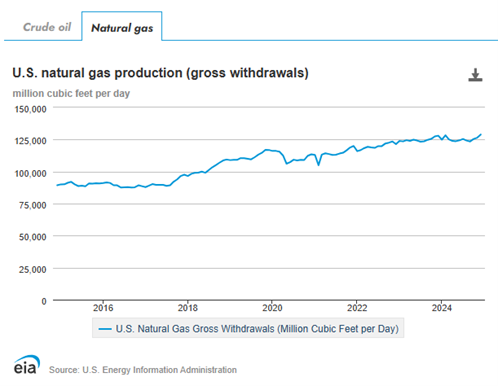
An increased emphasis on the domestic production of oil and gas and a decline in regulatory burdens are certainly welcome to the oil and gas industry and those related industries that depend on fossil fuels. Oil and gas production, which is higher now than at the start of the pandemic (see figures below), can only reach new heights.

A Good Place To Start

The Trump Administration has signaled that it plans to expand energy production, expedite energy permitting, and ‘roll-back’ regulations and practices that impede growth. As part of this effort, Mr. Trump has named Lee Zeldin, a former GOP member of Congress, to lead the EPA.
Mr. Trump has stated that Mr. Zeldin wishes to “ensure fair and swift deregulatory decisions” while maintaining “the highest environmental standards, including the cleanest air and water on the planet.’’ Further, Elon Musk and Vivek Ramaswamy, heads of the so-called Department of Government Efficiency, or DOGE, have vowed to work with the Trump Administration to use executive action “to pursue three major kinds of reform: regulatory rescissions, administrative reductions and cost savings.”

While there are many statutorily mandated regulatory programs and practices that are not easily ignored or revised, there are several regulations and practices that impede growth in violation of the governing statute and/or case law interpreting that statute.  One area that Mr. Zeldin and DOGE can focus on is the EPA/Corps of Engineers’ regulatory definition and interpretation of ‘navigable waters’ and ‘waters of the United States’ in the Clean Water Act.

Under the CWA, “navigable waters” means the “waters of the United States,” or WOTUS.  EPA/Corps promulgated a simple regulatory definition of WOTUS in the early 1970s.  Since then, though, EPA/Corps have expanded the regulatory definition, and their interpretations of the CWA and that definition, to include, as stated in Sackett v, EPA, “almost all waters and wetlands across the country [such that they] theoretically could be subject to a case specific jurisdictional determination.” Obviously, an expansive definition impairs growth and prevents development.  

Over the years, the US Supreme Court has issued several decisions seeking to clarify the meaning of WOTUS and curtail the EPA/Corps’ ever-expanding view of their jurisdiction.  Most recently, the Supreme Court issued its decision in Sackett, which was a full-throated endorsement of Justice Scalia’s plurality opinion in Rapanos v. US.  The Sackett Court completely rejected the ‘significant nexus’ test espoused by Justice Kennedy in his concurrence in Rapanos.

In Sackett, the Supreme Court stated that, to be jurisdictional, the adjacent wetlands “must be indistinguishably part of a body of water that itself constitutes ‘waters’ under the CWA.’”  According to the Supreme Court, this requires the party asserting jurisdiction over adjacent wetlands, that is, the EPA/Corps, to establish: 1) that the adjacent body of water constitutes WOTUS (i.e., a relatively permanent body of water connected to traditional interstate navigable waters) and 2) that the wetland has a continuous surface connection with that water, making it difficult to determine where the water ends and the wetland begins.

The EPA/Corps, though, do not seem willing to adopt and apply this simple formulation of WOTUS and the resulting jurisdictional scope over adjacent wetlands. Instead, they seem to retain their previous expansive interpretations to maintain or assert jurisdiction over wetlands that should not, post-Sackett, be included within the scope of the CWA.

By way of example, in one pre-Sackett jurisdictional determination, the EPA/Corps relied on the ’significant nexus’ test to assert jurisdiction over isolated wetlands.  After a request to review that prior determination in the wake of Sackett, the EPA/Corps determined that the very same isolated wetlands remained jurisdictional. EPA/Corps merely changed the designation of the ditches draining the wetland area to now claim that those ditches provide a ‘continuous surface connection,’ even though in the prior determination they claimed those same ditches were ephemeral at best.

These approved jurisdictional determinations are subject to judicial review under the Administrative Procedure Act. In other words, the recipient may file a petition or complaint for federal judicial review of that AJD.  Additionally, since the Supreme Court’s decision in Corner Post, such a review may be filed within six years of the harm or injury from the AJD and not the date of issuance of that AJD.  Still, the EPA/Corps should faithfully apply Sackett in the first instance instead of issuing expansive AJDs and requiring recipients to seek judicial review.

There are presumably many fertile grounds for DOGE to attack throughout the federal government.  However, the EPA/Corps’ current interpretation of WOTUS stifles, delays, and impairs growth and development, contrary to the Supreme Court’s express ruling in Sackett. Mr. Zeldin and DOGE would help growth tremendously if they addressed this issue as one of their first priorities.  

Trump, Part Two

The second Trump Administration will likely usher in a pitched battle between its attempt to ‘roll-back the Biden Administration’s environmental rules and policies and environmentalists’ defense of those same rules and policies. The outcome is anything but clear.

The Biden Administration still has some time and power to cement its legacy. In this interim transition period, it can, among other things, deny requests for reconsideration of promulgated rules, grant petitions of objection to Title V permits, and seek expedited rulings in multiple court cases across the country. It can also finalize proposed rules and policies. However, those actions can be undone, delayed, or stymied once the Trump Administration assumes control of the EPA and the Department of Justice.

Once the Trump Administration is in place, there are any number of possibilities. Most importantly, President Trump has the power to issue executive orders. He can revoke, rescind, or amend any existing executive order issued by President Biden. He can also issue his own orders with new policies, guidance, and requirements. It is likely that prior executive orders regarding climate change and environmental justice will be targeted for revocation or revision.

Mr. Trump has picked Lee Zeldin, a former Congressman from New York, as the Administrator of EPA. In announcing the pick, Mr. Trump stated that Mr. Zeldin will “ensure fair and swift deregulatory decisions that will be enacted in a way to unleash the power of American businesses, while at the same time maintaining the highest environmental standards, including the cleanest air and water on the planet.” Mr. Zeldin stated that he would prioritize efforts to “roll back regulations” that have caused American businesses to struggle and would “restore US energy dominance … while protecting access to clean air and water.”

One possible regulatory ‘roll-back’ is the joint EPA and Corps of Engineers rule on “Waters of the United States,” which published in the wake of Sackett v EPA. That rule has been criticized for imposing jurisdiction on waters well beyond that allowed by the Supreme Court’s ruling. The EPA/Corps have also issued guidance which provides expansive interpretations of jurisdiction which the Corps is currently following. It is likely the scope of jurisdiction under Sackett will be codified in a rule and the EPA/Corps guidance, which retains an expansive view of jurisdiction, will be reissued to more properly align with Sackett.

Oil and gas industry interests have advocated for repeal of certain Inflation Reduction Act energy policies and the issuance of numerous executive orders relating to, among other things, prioritizing natural gas and liquefied natural gas exports, prioritizing American energy production, and requiring agency actions to align with statutory intent. Additionally, they have suggested modification of EPA’s methane emissions rules and greenhouse gas reporting requirements, modifying or repealing the methane fee implementation rule, revoking and replacing CEQ’s NEPA Phase 1 and Phase 2 rules, and revoking the SEC’s climate disclosure rule.

Further, other than those rules specifically required by statute, it is likely that EPA will not promulgate additional rules as expansive or far-reaching as have been proposed during the Biden Administration. The Trump Administration will also likely utilize the Supreme Court’s ruling in Loper Bright, which overruled Chevron and generally curtailed the application of deference to EPA’s interpretation of a statute, to provide a ‘best reading’ of an environmental statute that does not allow for expansive interpretations of the applicable statute.

However, these anticipated actions will not be met with silence or inaction. Environmentalists will use public pressure, the comment process, litigation, and any other methods or means at their disposal, to oppose, delay, or stop any possible ‘roll-backs’ by the Trump Administration. They did so with some success in the first Trump Administration and so have experience with opposing a Trump-controlled EPA. It has been reported that they anticipate a second Trump Administration to overreach in its actions and they will be ready to exploit any such errors.

The extent to which the second Trump Administration will be successful in moving away from the Biden Administration and imposing its own agenda is hard to predict. Regardless, as with the first Trump Administration, it promises to be a litigious and contentious time.

Supreme Court Deals a Blow to the Administrative State

The Supreme Court has overruled Chevron, its forty-year-old decision which has allowed administrative agencies to impose their regulatory will on industries, small businesses, and individuals by requiring that courts defer to an agency’s interpretation of a statute. According to EPA Administrator Regan, the decision “hits EPA extremely hard.”

In general terms, Chevron provides guidelines for a court to review an agency’s action pursuant to an act of Congress using a two-step framework. First, a court must assess whether Congress, in the statute, has spoken directly to the issue at hand and, if so, that is the end of the inquiry as the clear will and intent of Congress must be followed. However, if the statute is silent or ambiguous as to the agency action at issue, the court must, as the second step, defer to the agency’s interpretation if it is based on a permissible construction of the statute. As many statutes are silent or ambiguous as to an issue, Chevron allowed agencies to wield great power to act as long as the action was based on a permissible reading, even if the court did not necessarily agree with that reading.

In overruling Chevron, the Court relied on the intent of the Framers and its traditional role, finding that it has always been the province of the court to interpret the law. The passage of the Administrative Procedure Act (APA) in 1946 did not change this traditional role as the APA codified the traditional understanding that courts must decide all relevant questions of law. The Court stated: “The APA, in short, incorporates the traditional understanding of the judicial function, under which courts must exercise independent judgment in determining the meaning of statutory provisions.”

Chevron changed that approach. Instead of a court interpreting a statute and/or deciding relevant questions of law, an agency was allowed to provide a permissible reading of a statute and a reviewing court was required to defer to that reading. In the Court’s view, Chevron “defies the command of the APA” and “triggered a marked departure from the traditional approach.” As a result, Chevron had to be overruled.

But, what is left in its place? The Supreme Court was somewhat unclear. It did state that a court must find a “best reading” of a statute and answer “the question that matters: Does the statute authorize the challenged agency action?” To get to that ‘best reading,’ the Court provided some guidance.

First, a court may “seek aid from the interpretations of those responsible for implementing particular statutes.” An agency interpretation “may constitute a body of experience and informed judgment to which courts and litigants may properly resort for guidance.” Second, an interpretation “issued contemporaneously with the statute at issue, and which have remained consistent over time, may be especially useful in determining the statute’s meaning.” Finally, a statute may provide some authority for an agency to “exercise a degree of discretion.”

The Court also referenced a decision older than Chevron and the APA, Skidmore v Swift, to provide some criteria for accepting an agency interpretation: The weight or deference provided to an agency “would ‘depend upon the thoroughness evident in its consideration, the validity of its reasoning, its consistency with earlier and later pronouncements, and all those factors which give it power to persuade, if lacking power to control.’” Even if there is now some uncertainty in how to determine whether the statute authorizes the agency’s action, a court cannot simply defer to an agency’s reading of a statute as they have done in the decades since Chevron was decided. Instead, the court must interpret the law and owes little, if any, deference to the agency’s interpretation. As a result, an agency will be unable to issue regulations or take actions that go much beyond the relevant statute.

The Right Result for The Sunshine Project

By John B. King (John B. King was a member of Formosa’s legal team, submitting portions of the briefs at the district court and First Circuit.)

The Louisiana First Circuit has issued a sweeping decision affirming and upholding the issuance of air emission permits by the Louisiana Department of Environmental Quality (LDEQ) for the Sunshine Project, Formosa’s $9.4 billion petrochemical facility located in St. James Parish (the Facility). RISE St. James, et al v. LDEQ, 23-0578 (La. App. 1 Cir. 1/19/24), — So.3d —, 2024 WL 207859 (the Decision). In doing so, the First Circuit reversed the legally deficient decision of the district court, which had adopted “almost verbatim” the suggested written reasons submitted by the Opponents to the Project.

A.  Facts

FG LA LLC (known as Formosa) sought to construct a petrochemical complex that would take ethane and propane, convert them into ethylene and propylene, and ultimately create high density polyethylene, linear low-density polyethylene, ethylene glycol, and polypropylene. Formosa choose a site in St. James Parish that was designated for industrial use, which was surrounded by industrial and agricultural uses, and which was about one mile from the nearest community on the west bank of the Mississippi River.

As a major source of air emissions, Formosa submitted applications to LDEQ to construct and operate the Facility. LDEQ reviewed the applications, which included the required air quality modeling. A public hearing was held and thousands of public comments were received.

In January 2020, after a review of the applications and all the public comments, LDEQ issued fifteen air emissions permits to construct the Facility. LDEQ issued a Prevention of Significant Deterioration (PSD) Permit and fourteen Title V Permits (the Permits), which together authorized the construction and operation of the Facility. LDEQ also issued a 182-page Basis for Decision and Public Comments Response Summary (Response to Comments), which provided, in detail, LDEQ’s reasons and rationale for granting the Permits. The PSD Permit also provided a detailed discussion of the Best Available Control Technology and the air quality modeling performed by Formosa. [1]

Several environmental organizations, such as RISE St. James, the Louisiana Bucket Brigade, and the Sierra Club (the Opponents), sought judicial review of LDEQ’s decision to issue the Permits. In very general terms, the Opponents argued that:

  • LDEQ violated the Clean Air Act due to its use of significant impact levels (SILs) to determine that the Facility’s emissions did not cause or contribute to a violation of the National Ambient Air Quality Standards (NAAQS);
  • LDEQ violated its constitutionally mandated duties as the public trustee of the environment; and
  • LDEQ failed to properly consider environmental justice issues, such as the alleged disparate impact on Black and minority members of nearby communities.

The appeal was assigned to District Judge Trudy White, now retired. After the matter was briefed and argued before her, she requested that all parties submit draft Written Reasons, in Word format, for her review. In September 2022, she issued her own Written Reasons for Judgment in which she vacated the Permits and remanded the entire matter back to LDEQ. Judge White’s Written Reasons for Judgment were an “almost verbatim” adoption of the draft Written Reason submitted by the Opponents.

LDEQ and FG appealed Judge White’s decision to the First Circuit. After an oral argument to a three-judge panel and another oral argument in front of a five-judge panel (which included the original three), the First Circuit issued its Opinion (the Decision). The First Circuit reversed Judge White’s decision and fully reinstated the Permits.

B.  The Decision

The Decision is a detailed and lengthy explanation of the facts, the arguments by the parties, the applicable law, and LDEQ’s reasoning and rationale. For almost every issue before it, the First Circuit noted the LDEQ’s stated basis for its decision on that issue, the support in the record for that decision, and the vast discretion afforded LDEQ in permitting matters. In doing so, the First Circuit highlighted the need for a complete administrative record and a robust discussion of the issues by LDEQ in its Basis for Decision and Response to Comments.

There are several important aspects to the Decision. This article will include a discussion of the main ones: the standard of review, the Clean Air Act issues, and certain issues associated with the scope and application of the public trust doctrine.

1.  The Standard of Review

The standard of review refers to the guiding principles to be applied by a court in reviewing a decision made by an administrative agency or a lower court. A lax or broad standard of review tends to provide a reviewing court with more latitude to overturn a lower court’s decision. By way of contrast, a more restrictive or narrow standard of review cabins or constrains a reviewing court as it reviews the lower court decision.

The Opponents argued that the First Circuit must give deference to the district court’s decision and factual findings. The First Circuit rejected this notion and applied the standard of review set out in Save Ourselves and Save Our Hills.

First, the First Circuit “reviews the findings and decision of the DEQ and not the decision of the district court” and “no deference is owed to the factual findings or legal conclusions of the district court.” Second, the First Circuit “should not reverse a substantive decision of DEQ on its merits unless it can be shown that the decision was arbitrary or that DEQ clearly gave insufficient weight to environmental protection in balancing the costs and benefits of the proposed action.” The test for determining whether an action was arbitrary or capricious is whether the action was taken “without reason,” a test that “imposes a significant limitation on judicial review.” Third, “considerable weight” must be given to LDEQ’s construction and interpretation of the statutory scheme it is entrusted to administer as well as its construction and interpretation of the rules and regulations under its authority.

When taken together, these principles provide a more restrictive or narrow standard of review. They impose a “significant limitation” on a reviewing court, which is prevented from reversing a substantive decision by LDEQ unless it was arbitrary (i.e., without reason) or there was insufficient weight provided to environmental protection. Throughout the Decision, the First Circuit applied this standard of review and found that the administrative record provided more than sufficient reasons for LDEQ’s decisions.

2.  The Clean Air Act Issues

The Clean Air Act issues relate to the modeling effort conducted by Formosa and the use of SILs (or significant impact levels) to determine that the Facility does not cause or contribute to a violation of the National Ambient Air Quality Standards (NAAQS).

Formosa conducted what the First Circuit described as “extensive air modeling.” Formosa conducted a preliminary impact analysis, a full impact analysis, and detailed refined modeling. The modeling was done in accordance with federal and state guidelines.

However, the model did predict exceedances of 24-hour PM2.5 and 1-hour NO2 NAAQS. Based on those exceedances, the Opponents claimed “that the mere existence of a modeled exceedance violates the Clean Air Act.” The First Circuit simply stated, “we disagree,” finding that the “existence of a predicted modeled exceedance is merely one step in the modeling process.” Because of the modeled exceedances, Formosa followed the approvable air quality modeling procedures and conducted the required detailed refined modeling which showed that the modeled exceedances “are caused by off-site sources.”

The First Circuit also approved the use of SILs as part of the modeling effort to determine whether emissions “cause or contribute”: to a violation of the NAAQS. The NAAQS are health-based standards set by EPA at levels requisite to protect public health with an adequate margin of safety.

Under the Clean Air Act, emissions are not allowed to “cause or contribute’ to a violation of the NAAQS.

The Opponents mounted a vigorous challenge to the use of SILs to make this determination. They essentially claimed that any contribution to a violation, regardless of its size, violated the Clean Air Act. The First Circuit found that LDEQ’s “use of SILs in the PSD program is supported by its interpretation of the Clean Air Act itself, case law interpreting the Clean Air Act, and the regulations and guidance promulgated or issued by the EPA pursuant to the Clean Air Act. Thus, DEQ had a reasonable basis for incorporating the use of SILs in its PSD program, and its use of SILs is neither erroneous nor arbitrary and capricious.”

The First Circuit noted that entire purpose of the PSD program was to prevent “significant” deterioration of air quality and that EPA had incorporated SILs into their own regulations. Importantly, the First Circuit recognized that the use of SILs is based on EPA’s “longstanding policy” and even cited to EPA’s guidance documents. It also noted that LDEQ had incorporated the guidance memoranda “into the administrative/permit record as justification for the use of EPA’s recommended SILS in its PSD program” and “considerable weight” must be given to an agency’s

construction and interpretation of the statutory scheme that it administers and to its own rules.

To reach these conclusions, the First Circuit relied extensively on the documents in the administrative record and LDEQ’s articulation of its reasoning as set out in the Basis for Decision and Response to Comments. Because the record supports LDEQ’s reasoning, the First Circuit could not say that LDEQ’s decisions, such as the use of SILs, were ‘without reason’ and thus arbitrary.

3.  The Public Trust Issues

At the district court and in the First Circuit, the Opponents grouped or styled the rest of their arguments as violations of the public trust doctrine. Essentially, they argued that LDEQ did not fulfill its duty as the public trustee because LDEQ failed to consider a variety of issues raised by the Opponents that they claimed should have been considered as part of the public trust analysis.

The public trust doctrine emanates from the Louisiana Constitution and generally requires that LDEQ, as the primary agency tasked with protecting the environment, articulate in written findings its consideration of three basic issues: whether the potential and real adverse environmental effects of the proposed project have been avoided to the maximum extent possible; a balancing (a cost-benefit analysis) of the environmental impact costs against the social and economic benefits of the project demonstrating that the latter outweighs the former; and whether alternative projects, alternative sites, or mitigating measures offer more protection to the environment without unduly curtailing non-environmental benefits. The consideration of these issues does not mandate a specific result; instead, LDEQ is afforded a great deal of discretion and latitude in individual matters.

Several of the main issues associated with the public trust doctrine are discussed below.

a.  Environmental Justice

LDEQ and Formosa argued that the inclusion of environmental justice concepts in permitting decisions is not mandated by any constitutional provision, statute, regulation, or policy. In this regard, the First Circuit disagreed with LDEQ and Formosa, finding that “the directives from the Louisiana Supreme Court in Save Ourselves, which require consideration of economic, social, and other factors, broad enough to include an analysis of environmental justice, as defined by the EPA.” (Citation and punctuation omitted.)

Based on this decision, then, the consideration of environmental justice concerns is a part of the public trust review. However, as such, LDEQ’s consideration of these issues and its conclusions should be entitled to the “rule of reasonableness” and the same “room for a reasonable exercise of discretion” afforded other components of the public trust review, as set forth in Save Ourselves. In other words, if LDEQ articulates its reasons and there is support in the administrative record for those reasons, LDEQ should not be deemed to have acted arbitrarily (i.e., without reason).

Even so, LDEQ did conduct an extensive environmental justice analysis which was articulated in the Basis for Decision and Response to Comments. The First Circuit summarized LDEQ’s environmental justice analysis, ultimately finding that “we cannot say that [LDEQ’s] decision was in violation of its public trust duty or that its environmental justice analysis was arbitrary and capricious or otherwise without reason.” Indeed, there was “ample documentation in the administrative record” to support LDEQ’s conclusions.

Several key points were made by LDEQ which were highlighted by the First Circuit. First, LDEQ found that emissions from Formosa would not cause or contribute to a NAAQS violation and so the permits “do not allow for air quality impacts that could adversely affect human health or the environment.” EPA had previously regarded compliance with the NAAQS as presumptively protective “and that emissions of a pollutant meeting the NAAQS should not be viewed as ‘adverse’ under Title VI of the Civil Rights Act.” Although EPA did away with that rebuttable presumption, “the determination of whether there were ‘adverse’ impacts was ‘still intrinsically linked to whether a given area is compliant with the NAAQS.’”

Second, LDEQ addressed the alleged cancer risks from emissions of toxic air pollutants, primarily ethylene oxide, as to potentially affected Black and minority populations in the surrounding community. While LDEQ noted that there had been declines in the emission of toxic air pollutants and that there would be no ‘fenceline community,” the First Circuit specifically noted LDEQ’s use and reliance on data from the Louisiana Tumor Registry. That data, which include actual cancer incidences and deaths, indicted that cancer did not affect Black men or women in a significantly different manner. For example, rates “rates for all cancers combined for [W]hite men, [B]lack men, and [B]lack women do not differ significantly from Louisiana rates.”

Third, the First Circuit addressed claims that a disparate impact was created by emissions from the Facility, finding that LDEQ “specifically considered the impact of emissions on the nearby Black and minority communities.” LDEQ had found that there was no adverse impact, that overall emissions had significantly declined, that cancer rates were not significantly different based on data from the Louisiana Tumor Registry, that Formosa sought a site as far away from all people, regardless of race, and that the Facility was at least a mile from residential communities. It concluded that the fact that the Facility “is situated near a minority community alone is insufficient to establish a disproportionate effect on a minority community,” citing a prior case. As a result, and based on these findings, the First Circuit found that “even if there was evidence of an ‘adverse impact,’ there was no evidence of a ‘disparate impact.’”

Finally, the First Circuit highlighted LDEQ’s conclusion regarding the substantial limitations of the use of the EJScreen, as set forth by EPA itself. For example, EJScreen should not be used “to quantify specific risk values for a selected area” and that the screening-level results supplied by the EJScreen “do not, by themselves, determine the existence or absence of environmental justice concerns in a given location.” The Opponents had touted the EJScreen data to establish that “there is a ‘disparate impact’ or a disproportionate effect on a minority community.” The First Circuit supported LDEQ’s determination “based on specific directives from the EPA” that the EJScreen “information remains unsuitable for the use to which the [Opponents] are trying to use it: to quantify specific risk values for a selected area and as a basis for agency decision-making regarding the existence or absence of environmental justice concerns.”

b.  Cumulative Impact Analysis

The Opponents argued that LDEQ failed to require Formosa to model the cumulative or combined

impact of all of its toxic air pollutants. The First Circuit rejected this argument.

The issue had come up in a prior matter (In re: Petroplex, 2010-1194 (La. App. 1st Cir. 3/25/11), 2011 WL 1225871). In that case, a similar argument was made but the First Circuit did not require such modeling because modeling was done in accordance with approval protocols and the facility emissions were lower than the ambient air standards. As a result, additional cumulative modeling was not required.

Similarly, Formosa conducted extensive air modeling in accordance with EPA’s and LDEQ’s approved modeling guidance and protocols. That modeling effort showed, like the modeling effort in Petroplex, that no ambient air standard for any toxic air pollutant would be exceeded. As a result, the First Circuit could not say that LDEQ’s “decision not to require Formosa to model the cumulative or combined impact of all of its toxic air pollutants was arbitrary and capricious or in violation of its duty under the public trust doctrine.”

c.  Alternative Sites

Formosa conducted a robust alternative sites analysis in which sites were eliminated because they were located in what, at the time of site selection, was to be a non-attainment area. A facility to be constructed in such an area must purchase offsets in the form of expensive emission reduction credits. In this case, the amount of offsets that would be required to be purchased by Formosa “effectively precluded construction of the complex” because the requisite number of credits were not available.

The Opponents argued that the elimination of the non-attainment sites was arbitrary. The First disagreed, stating that LDEQ “had a reason, supported by the administrative record, to find that the five sites in Ascension Parish were not feasible alternative sites for the proposed Formosa complex.” As a result, LDEQ’s analysis of alternative sites was not arbitrary.

C.  Conclusion

The First Circuit’s decision upholding LDEQ’s issuance of the Permits provides a powerful precedent and multiple arguments for LDEQ and permittees who seek to fend off judicial challenges to LDEQ’s decision to issue a permit. However, there are two main “takeaways” from this decision:

  • LDEQ should provide robust and detailed reasons for its decision to grant the permit in a Basis for Decision, Response to Comment, and/or other permit documents; and
  • The administrative record should be replete with sufficient evidence to support any and all such reasons.

Here, the administrative record included a vast amount of information to support LDEQ’s decision, much of which was supplied by Formosa as part of the permit process. In turn, LDEQ provided detailed reasons for its conclusions and the decision to issue the Permits. As a result, and faced with such a record and reasoning, the First Circuit could clearly find, and did find, that the decision was not arbitrary (i.e., without reason).

A copy of the decision can be found here.


[1] LDEQ later issued a Supplemental Basis for Decision in response to an order by the district court.